DRAGON AGRO PRODUCTS
Aroids, Carnivorous Plants, Orchids
, Supplies & Unusuals
CODE: Temperature-Lights-Water-Potting Media-Size-Comments
CYPRIPEDIUM
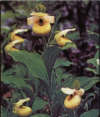
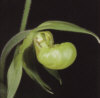
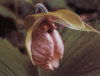
Cypripediums or lady slippers orchids are temperate orchids and have adapted
to temperate climates by becoming deciduous and dormant during times of inhospitable
weather. Most species require several months at near-freezing temperature to
become "vernalized," i.e., brought to the condition they are normally in at
springtime, so that they can produce leaves. If your climate does not offer
several months of temperatures near- or below-freezing, your plants should be
given artificial refrigeration. Cypripediums are slow growing plants and it
is common to have a plant bloom in 5 to 7 years from seedlings.
CULTIVATION.
The Ideal Site
These plants do best in a place that remains cool throughout the day but also
one that has morning sun or high dappled shade. Plants grown with ample sunlight
are more apt to multiply faster and will have a greater bloom count than those
with less sun are. The more "cool sun" the better, just make sure the soil temp
does not warm too much. Balance the need for lower soil temps with the need
for sun and you will be on your way to enjoying these plants for many years.
Soil/Moisture Needs
A common requirement for all Cypripediums is the absolute need for a well drained
but water retentive soil. Amend poorly drained clay soils with gravel, sand
and organic matter. Many experienced growers recommend the black sedge peat
as the organic additive of choice. The use of raised beds is also recommended
as it assures that the plants root system does not sit in soggy soil for any
length of time. The Yellow Lady's Slipper (Cypripedium parviflorum pubescens)
is perhaps the most tolerant of non moist soils, but it is safe to say that
if the soil is kept moist through the month of July your slippers should be
quite content.
Feeding
This group of plants can be fed with dilute solution of a standard 10-10-10
fertilizer. A one tenth strength solution can be applied every 3 weeks through
July.
Mulching
A light mulching will be beneficial in helping retain moisture that ultimately
cools the soil. No more than an inch of mulch should be used around the plant's
stem, as they may be prone to fungal attack. This is especially important in
hot humid weather. A light mulching for winter will attract fewer rodents that
are capable of doing damage.
Planting
The crowns of the plant should be covered with an inch of soil. The roots of
the plant should be carefully laid so that root ends do not lay in an upward
direction. Be careful of squirrel activity as they may tug the plant out of
the soil. Keep moist but not wet.
PROPAGATION
Divide carefully in early or midspring, and replant immediately. Some of the
soil from the root ball which contains beneficial fungal mycorrhizae should
be planted with each division.
Note: All Cypripediums are sold out . All Cypripediums
are discontinued hereafter.
References:
- The American Horticultural Society - A-Z Encyclopedia of Garden Plants.
Editors-in-chief, Christopher Brickell and Judith D. Zuk. Published by DK
publishing, Inc., 95 Madison Avenue, New York, NY 10016 ISBN 0-7894-1943-2
- The Genus CYPRIPEDIUM by Phillip Cribb, Published in association with The
Royal Botanic Gardens, Kew, Timber Press ISBN 0-88192-403-2
- Woods End… A rescue wildflower nursery specializing in the rescue of rare
plants experiencing imminent habitat loss. Protected plants (MS 17.23) are
regulated by the Minnesota Department of Agriculture, Plant Protection Division.
Permit number SS1999-1 allows the sale of these plants.
- WILD ORCHIDS Across North America- A botanical travelogue- by Philip E.
Keenan
Timber Press Inc 1998 ISBN 0-88192-452-0
PAPHIOPEDILUM
|---Species---| ---Uniflora
Hybrids---|---Multiflora Hybrids---|---Pots---|
--Flasks--|
Paphiopedilum Species
With their habitats ever diminishing and their popularity increasing, these
plants have been becoming a much sought-after commodity. We compiled one of
the more comprehensive (and reasonably priced!) offerings of these stunning
and popular orchids. Click on the small pictures if you like a detailed rendition.
By the way, lady slippers from the old world are called Paphiopedilum.

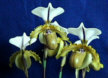 spicerianum ((Candor HCC/AOS x self) x (Anna x self))- flowers that look
like a nun's hat - white w/ black or red line. Expect larger symmetrical flowers.
spicerianum ((Candor HCC/AOS x self) x (Anna x self))- flowers that look
like a nun's hat - white w/ black or red line. Expect larger symmetrical flowers.
I-SH-M-2 1/2" pot-sdlg, BS @$25
 lowii A multiflora Borneo species
A lowii plant that we exhibited at the Maryland Orchid Show just recently in
April '97 won best specimen by the MOS and was also awarded HCC by the AOS.
2"~3" LS@$10, 3"~4" LS@$15, 5"~6"@$20
Paph. spicerianum - flower that looks like a nuns hat.
I-SH-M-3 1/2" pot- BS $25
Paphiopedilum Hybrids
Uniflora Hybrids
The Uniflora Papiopedilum hybrids have always been among the most popular of all orchids. Color range from the
very dark color that almost border on black to pure white to yellow and pink. As any other Paphiopedilum, most
of them perform best when underpotted and never allowed to dry out completely. Usually, each growth would produce
a single solitary flower on one spike. The very healthy plant would usually produce two flowers per growth.
Multiflora Hybrids
The Multiflora Paphiopedilum hybrids have always been among the most popular and showy of all orchids. They
get a number of blooms per stem, and most of them have very large flowers.Most of them perform best if potted a
little on the tight side but never allowed to dry out completely. At maturity, they will give the best blooms if
grown in about the same light as a cattleya. They also perform best when allowed to grow into large plants, so
resist the urge to divide them! Many of these will take some time to reach blooming size, but in our estimation,
they are well worth it!
Mount Toro (stonei x
philippinensis) 'Green Valley' x rothschildianum 'Green Valley'
I-SH-M-2-1/2"pot 3"LS @$20
Michael Koopowitz (philippinense
'F92' x sanderianum 'Dragon Dance')- Looks just like a sanderianum with
the long petals.
I-SH-M-2-1/2"pot 2"LS @$30; 3" LS @$50
Gloria Naugle ( micranthum
x malipoense ) - .
I-SH-M-2-1/2"pot 2"LS @$30
Angel Hair ( St.
Swithin x sanderianum ) - Looks just like a sanderianum with the long petals.
I-SH-M-2-1/2"pot 2"LS @$30; 3"LS @$50
Berenice ( philippinense 'Cayuga' x lowii 'Nova' AM/AOS )
I-SH-M-2-1/2"pot 4"~6" LS @$40~$60
Saint Swithin (rothschildianum x philippinense) The finest
of all paph. hybrids. Large blooms, 3-5 per stem. Dorsal sepal white, striped
in chestnut. Petals very long and flat; gold, spotted in chestnut. Pouches honey-tan.
Always an imposing sight when in bloom. Very reliable bloomers and strong growers.
I-SH-M- BS , LS 14~18" LS @ $75
Lady Isabel (stonei x rothschildianum)A classic hybrid.
3-5 large showy blooms. Very vigorous and free-blooming. Brown striped in mahogany.
heavily spotted in black. Pouch bright mahogany. An outstanding hybrid overall
I-SH-M- BS @ $75
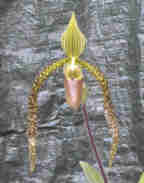 ( sanderianum x sukhakulii ) .
I/W-SH-M- BS @ $100
Delrosi (delenatii 'The King'x rothschildianum 'Eureka' AM/AOS)
When these bloom, they can be among the most outstanding of orchids. Fanciful
deep pink to red blooms of fine form; often with 3-4 blooms per stem. In order
to bloom regularly, these should never be allowed to dry out completely, and
should be left as specimens rather than divided.
I-SH-M-2 1/2" pots - 4~6" LS @ $25, 7"~8"LS @ $35
Top of Page
Phragmipedium Species
Lady Slippers from the Central and South Americas are called Phragmipedium . Similar to Paphiopedilum except
its leaves are more grasslike with larger, more linear-lanceolate leaves held nearly erect.. Generally, they prefer
damp to wet acid substrate and acidic water, at a pH as low as 5-6 with higher level of nutrients and they prefer
a slightly medium to high ligh intensity to promote flowering . Phragmipedium will do well when the plants are
repotted every 6 months / yearly .
 pearcei Miniature Grasslike leaves . Prefers to be in wet mix. From
Ecuador
pearcei Miniature Grasslike leaves . Prefers to be in wet mix. From
Ecuador
Division BS @ $40 Limited Qty
 .
sargentianum NBS @ $28 Likes to be wet all the time
.
sargentianum NBS @ $28 Likes to be wet all the time
. longifolium 'Brewbaker' BS @ $25 Likes to be wet all the time
Phragmipedium Hybrids
7403 Eric Young 4N 'Mt. Millais' AM/RHS x lindleyanum
7434 Eric Young 4N x schilimii
7481 Dick Clements 4N x pearcii 'Birchwood' AM/AOS
7506 Eric Young 4N 'Mount Millais' AM/RHS x pearcii 'Birchwood' AM/AOS
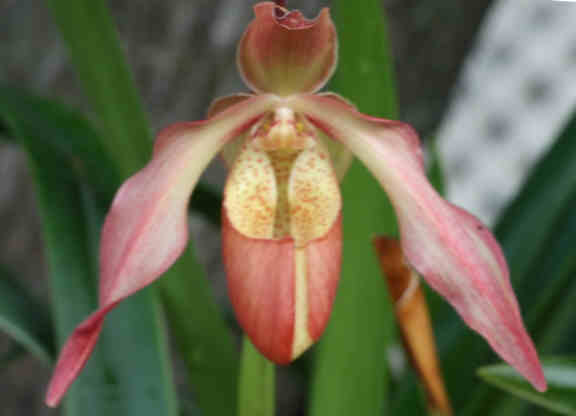 7507 Sorcerer's Apprentice 4N x besseae
Limited $40
7516 Eric Young 4N x caricinum 'Aileen' AM/AOS
7525 Eric Young 4N x Sorcerer's Apprentice 4N
Limited
7529 Sorcerer's Apprentice 4N x warscezianum 4N
7530 longifolium 4N x Sorcerer's Apprentice 4N
7535 Erice Young 4N 'Mount Millais' AM/RHS x Sorcerers Apprentice 4N
Limited
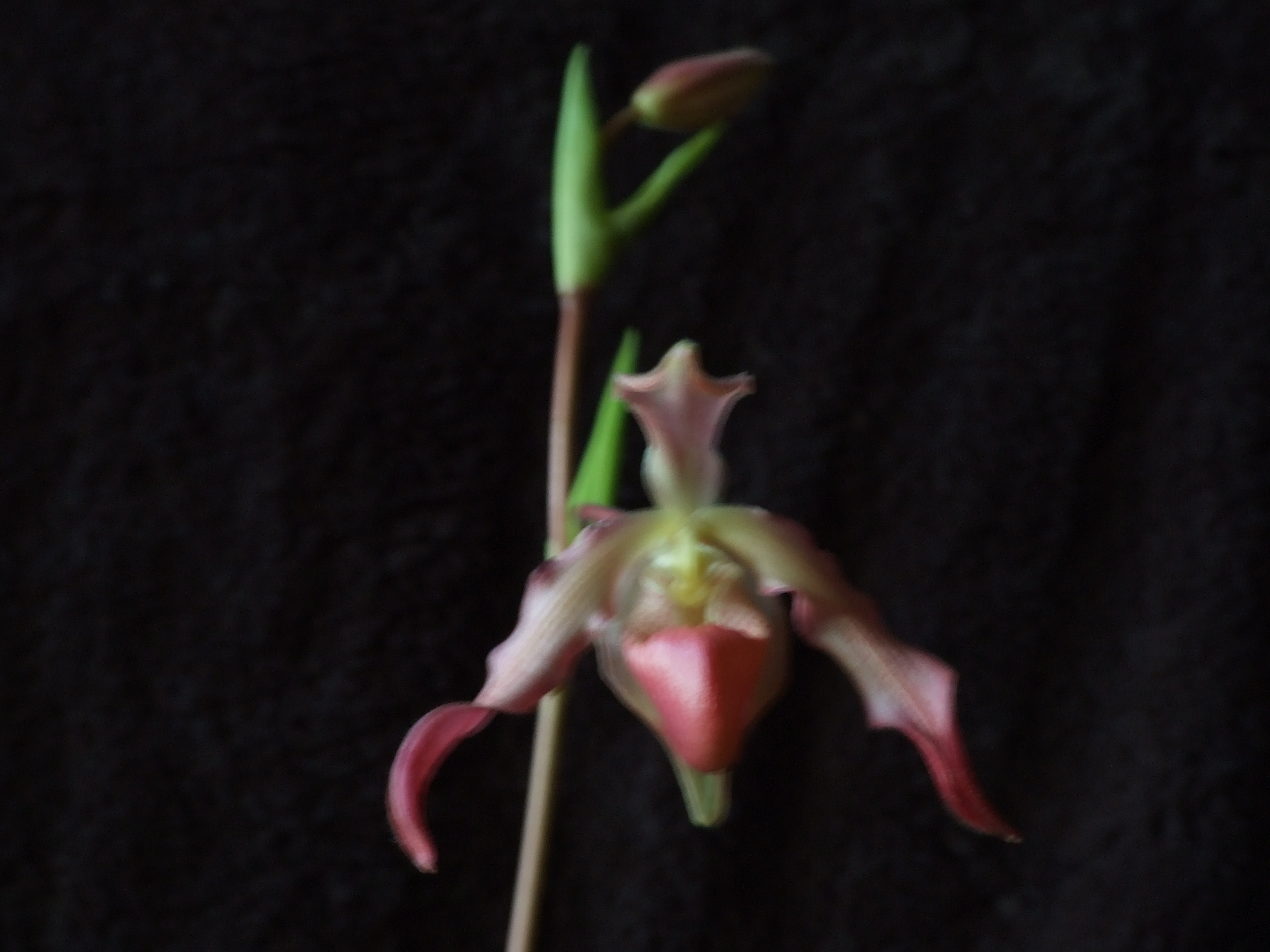 7537 Eric Young 4N x lindleyanum 'Birchwood' AM/AOS
Limited
.jpg) 7538 Sorcerer's Apprentice 4N x caudatum sanderae
7538 Sorcerer's Apprentice 4N x caudatum sanderae
.JPG) 7543 longifolium x warszewiczianum
7543 longifolium x warszewiczianum
Limited
@$40
7545 Eric Young 4N x Sorcerer's Apprentice 4N
Limited
7548 besseae x Sorcerer's Apprentice 4N
Limited
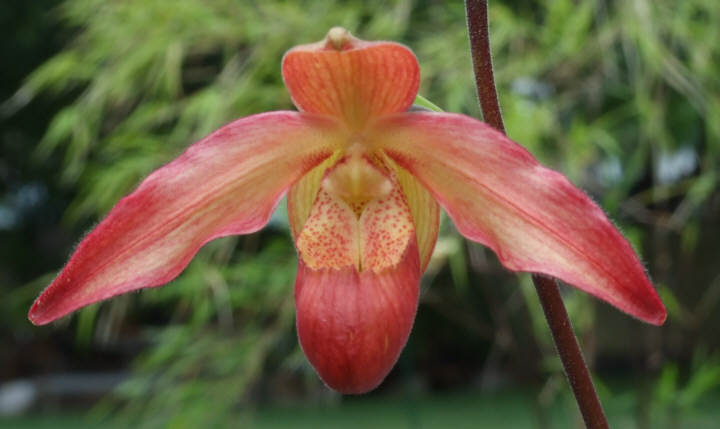 7556 lindleyanum x Eric Young
Limited BS @$40
7557 Sorcerer's Apprentice 4N x caudatum sanderae
Limited
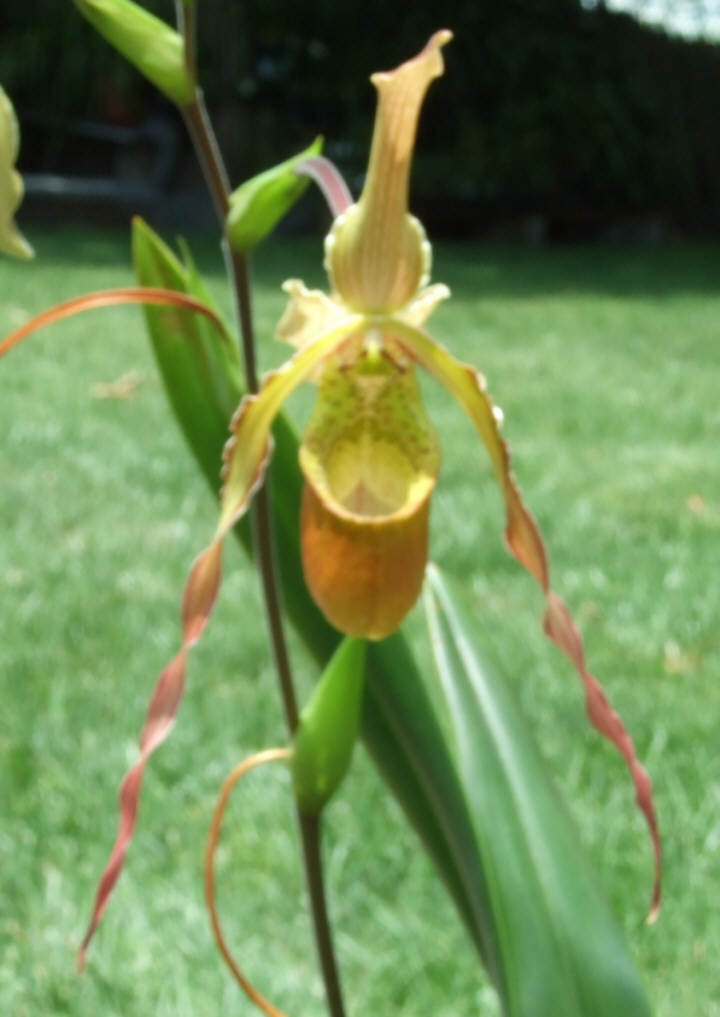 7568 Sorcerer's Apprentice 4N x Grande 4N
BS @$40
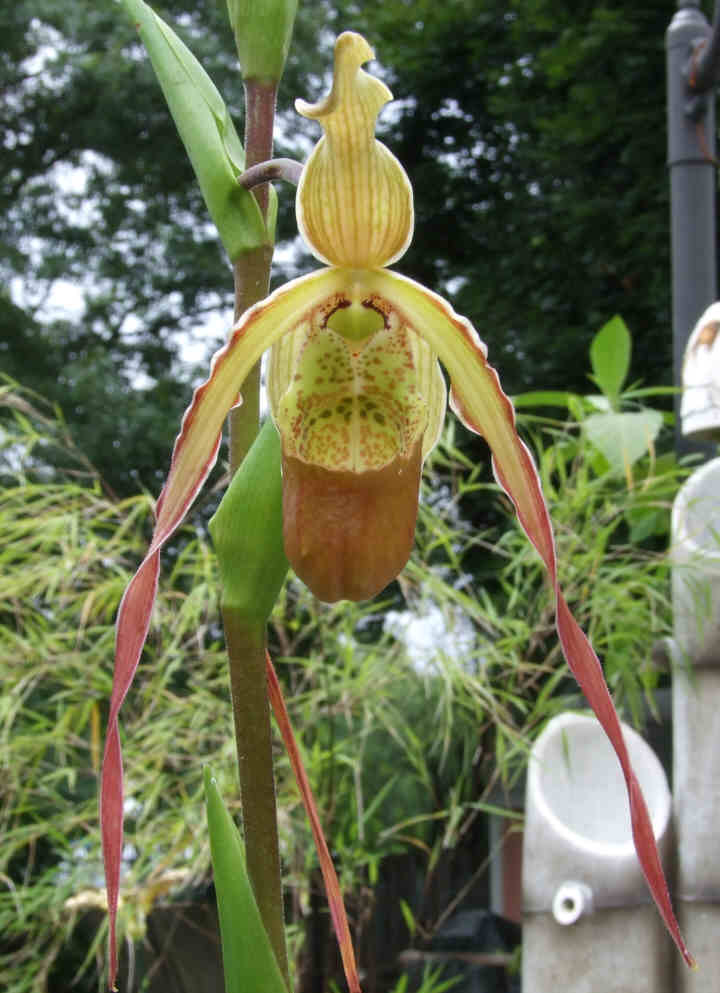 7569 Sorcerer's Apprentice 4N x Grande 4N
BS @$40
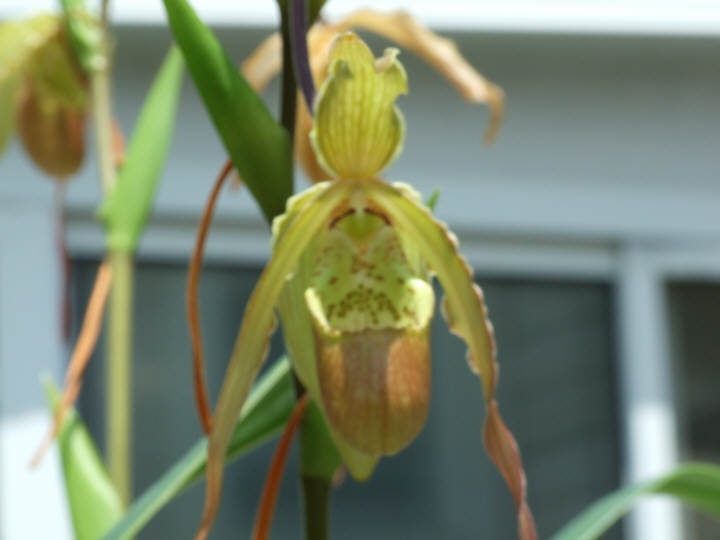 7572 Sorcerer's Apprentice 4N x wallisii
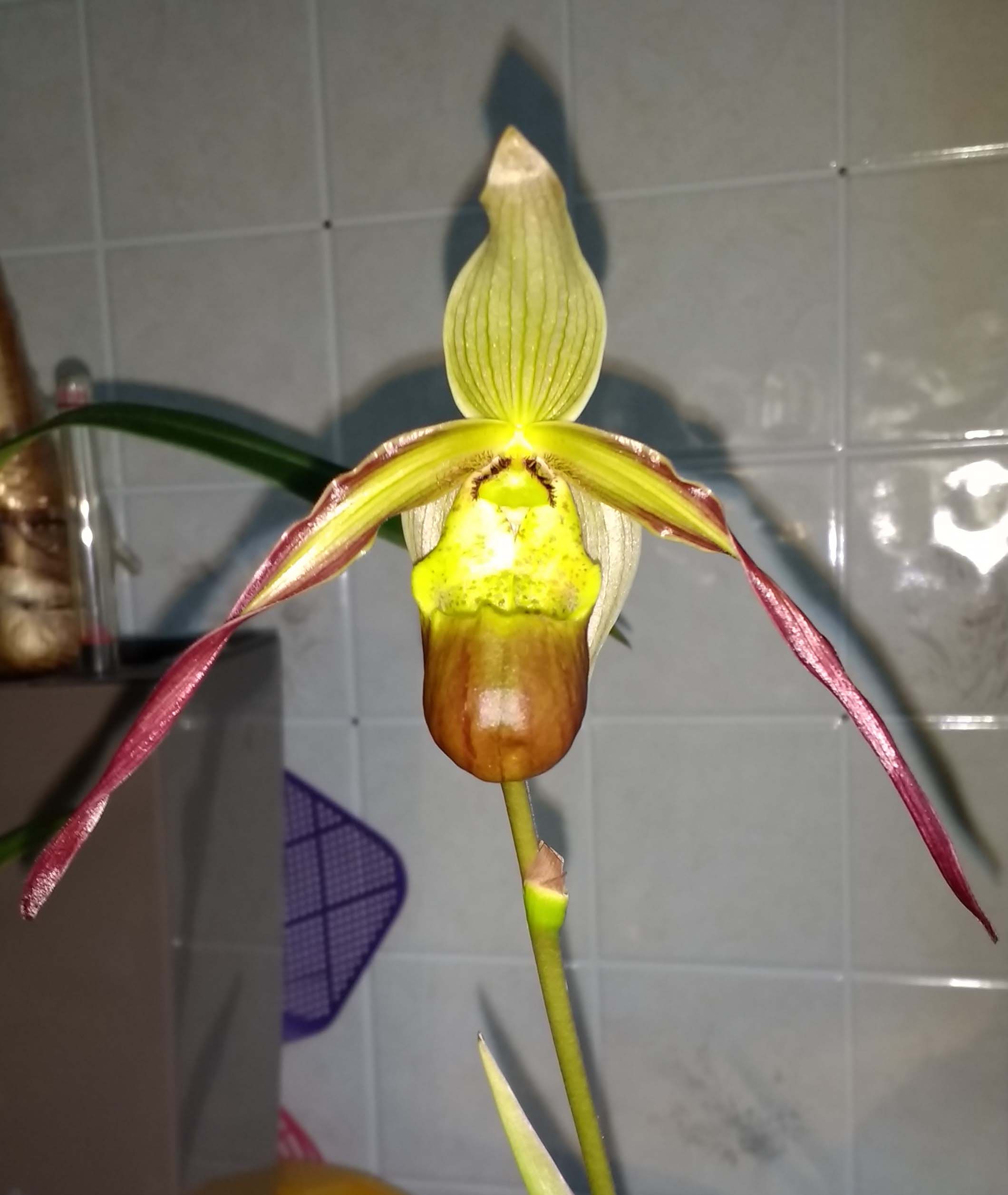 7649 Sorcerer's Apprentice x Amazonica 'Birchwood'
Limited
7659 Sorcerer's Apprentice x longifolium 4N
Limited
POTS
Your Paph collection won't be complete without using the proper
pot to contain your plant. As mentioned before, Paphiopedilum likes to be underpotted,
develop long roots and have the potting mix dry out evenly. These are some of
the pots available from 2-1/2 square 3" tall, 3-1/2" square 5"
tall, 5" dia. 7" tall, 5-1/2" dia 7-1/4" tall, 6" wide
8" tall, 6-1/2" dia. 9" tall with price ranging from $1.50 to
$18. Please click on picture for more details
.
References:
Paphiopedilum - A monograph of all tropical and subtropical Asiatic slipper
orchids - by Dr. Guido J. Braem
Hildesheim: Brucke-Verl. Schmersow, 1988 ISBN 3-87105-021-0
The Paphiopedilum Grower's Manual by Lance A. Birk
Published by PISANG PRESS, Santa Barbara, CA 93101 October 26 1983 , ISBN 0-9612826-0-6
The Slipper Orchids - observation of the four genera of the family - Cypripedium, Paphiopedilum, Selenipedium
and Phragmipedium by Dr. Catherine Cash
Timer Press, Inc. ISBN 0-88192-183-1
Go to Top Page
Return to Orchids Section
Return to Dragon Agro Products. Main page